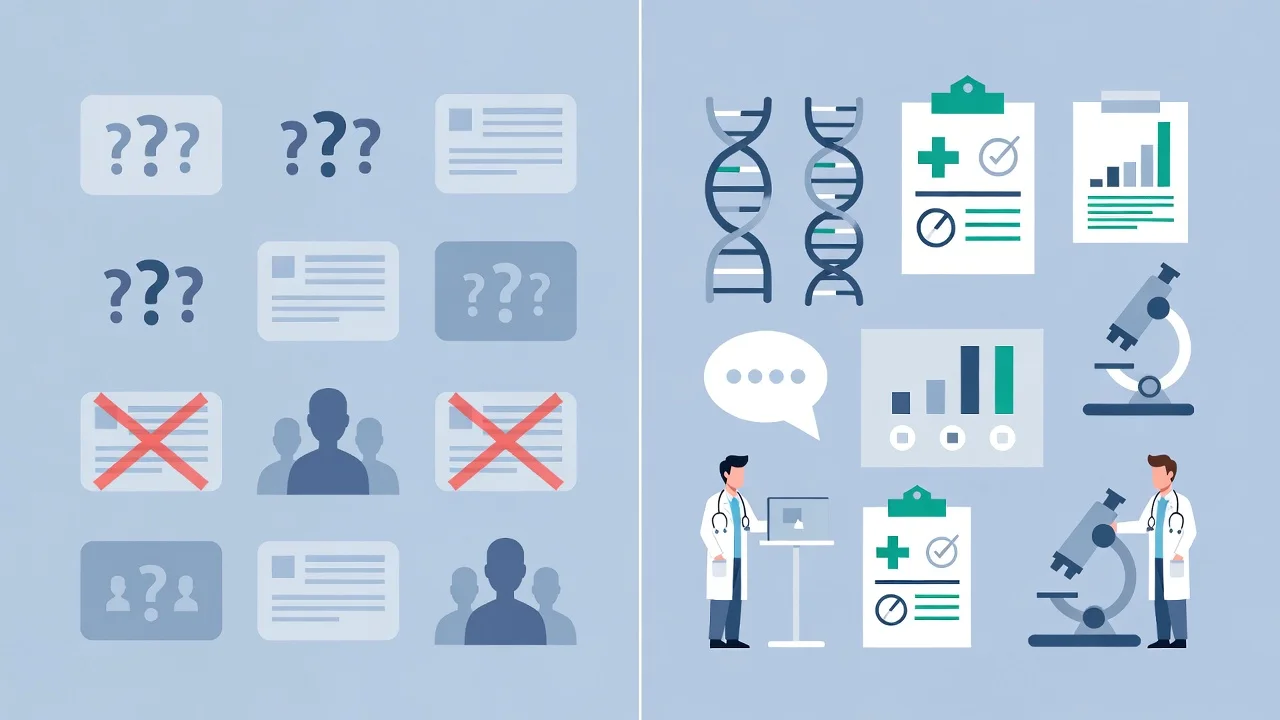
Why it is important?
Cancer Myths vs Facts
Myth 1: Cancer is always inherited
FALSEFact: Most cancers are not hereditary.
Only 5–10% of cancers are linked to inherited genetic mutations, while the majority arise due to lifestyle, environmental, and age-related factors³. This highlights the importance of prevention strategies such as tobacco cessation, vaccination, and routine screening rather than relying solely on family history.
Myth 2: Cancer is always fatal
FALSEFact: Many cancers are curable or manageable when detected early.
Advances in early diagnosis, targeted therapies, and immunotherapy—driven by innovation from cancer medicine companies—have significantly improved survival rates across multiple cancer types⁴. Several cancers now have long-term survival comparable to chronic diseases.
Myth 3: Sugar directly feeds cancer
FALSEFact: There is no clinical evidence that sugar intake directly accelerates cancer growth.
While cancer cells utilize glucose, this is a feature of all rapidly dividing cells. Clinical studies do not support eliminating sugar as a cancer cure or control strategy⁵. However, obesity—linked to excessive caloric intake—is a recognized cancer risk factor.
Myth 4: Surgery or biopsy causes cancer to spread
FALSEFact: Properly performed medical procedures do not promote cancer spread.
Surgical oncology and biopsy techniques follow strict oncological principles and are essential for accurate diagnosis and treatment planning. Large studies confirm that these procedures do not increase metastasis risk⁶.
Myth 5: A positive attitude alone can cure cancer
FALSEFact: Emotional well-being supports quality of life but cannot replace treatment.
Psychological resilience improves coping and adherence to therapy, but there is no scientific evidence that attitude alone can cure cancer. Effective treatment depends on evidence-based oncology products, systemic therapies, and multidisciplinary care⁷.
Myth 6: Cancer pharmaceutical companies are hiding a cure
FALSEFact: Cancer is not a single disease, and there is no hidden universal cure.
Cancer encompasses hundreds of biologically distinct diseases. The development of oncology drugs requires rigorous clinical trials, regulatory oversight, and long-term safety evaluation⁸. Breakthroughs occur incrementally, not secretly.
Real Cancer Risk Factors vs Common Myths
Population-based studies show that people often misattribute cancer causes, overestimating factors like stress or mobile phones while underestimating proven risks⁹.
Scientifically Proven Risk Factors
- Tobacco and smokeless tobacco use
- Alcohol consumption
- Viral infections (HPV, HBV)
- Obesity and sedentary lifestyle
- Occupational and environmental carcinogens
Unsupported or Weakly Supported Beliefs
- Mobile phone radiation
- Microwave ovens
- Artificial sweeteners
- Stress as a sole cause
Improving awareness of real risk factors significantly reduces belief in cancer myths⁹.
The Role of Oncology Pharma Companies
Modern oncology drug companies play a pivotal role in transforming cancer care by developing targeted therapies, immunotherapies, biosimilars, and supportive care oncology products. These advances are grounded in decades of peer-reviewed research and clinical evidence, not anecdotal claims.
Conclusion
Cancer myths persist, but science is clear. Evidence-based information empowers patients, improves early detection, and supports informed decision-making. Trusting peer-reviewed research and qualified oncology professionals remains the strongest defense against misinformation.
References
- Vrinten C, et al. Cancer myths and misconceptions: A systematic review. Psychooncology. PubMed.
- Niederdeppe J, et al. Fatalistic beliefs about cancer prevention. J Health Commun. PubMed.
- Indian Journal of Medical Research. Debunking oncologic misconceptions. Medknow Publications.
- DeVita VT, et al. Cancer: Principles & Practice of Oncology. Springer Nature.
- Chan JM, et al. Dietary sugar and cancer risk. ScienceDirect.
- Demicheli R, et al. Surgery and tumor dissemination. Annals of Oncology. PubMed.
- Spiegel D, et al. Psychosocial aspects of cancer care. The Lancet Oncology.
- Nature Reviews Cancer. Drug development and cancer complexity. Springer Nature.
- Vrinten C, et al. Public understanding of cancer risk factors. BMC Public Health. PubMed.