Cancer treatment has evolved significantly over the past two decades. Conventional chemotherapy works by targeting rapidly dividing cells, which may affect both malignant and healthy tissues, often leading to systemic toxicity and treatment-related adverse effects¹. Advances in tumour biology and molecular diagnostics have enabled oncology pharma companies and oncology drug companies to develop targeted therapy, a precision-based treatment approach designed to selectively interact with specific molecular pathways involved in cancer progression².
Targeted therapy represents a paradigm shift for cancer medicine companies by moving away from generalized cytotoxic treatment toward biomarker-guided therapeutic strategies that improve treatment specificity and clinical outcomes³.
Understanding Targeted Therapy
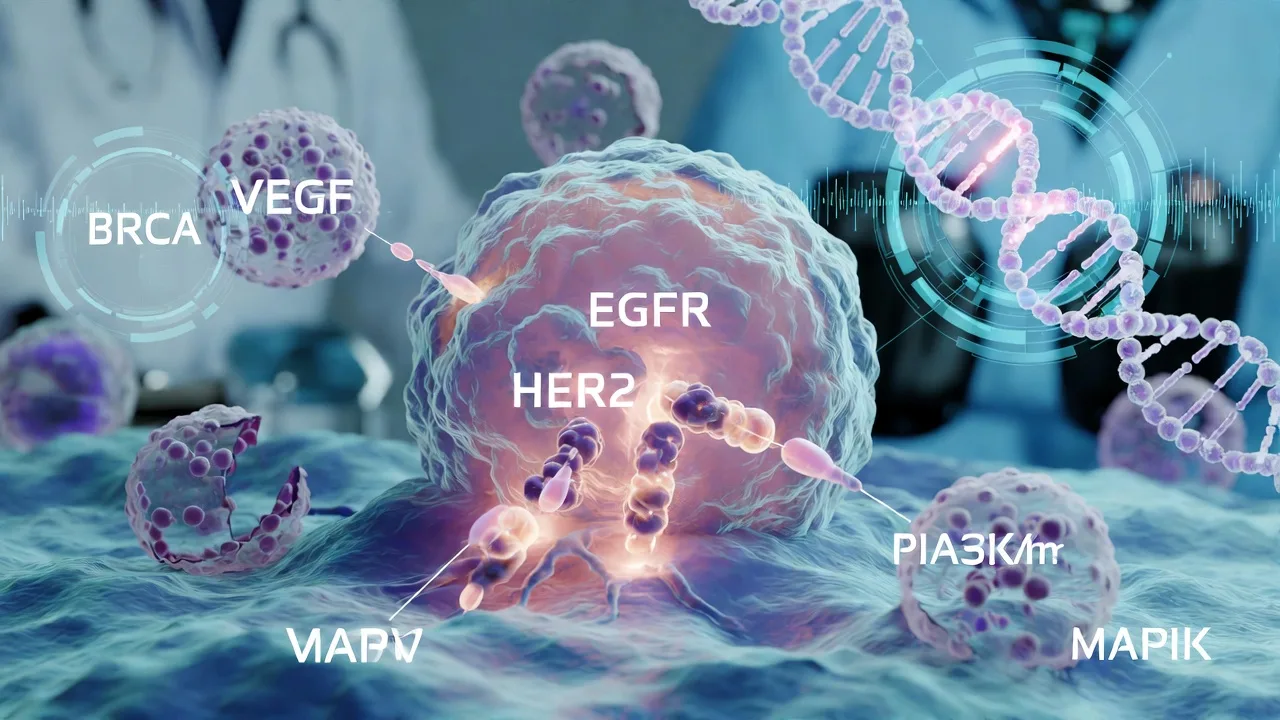
Targeted therapy refers to oncology products that inhibit tumour growth by interfering with molecular targets responsible for cancer cell proliferation, angiogenesis and metastasis⁴. These therapies are developed to act on defined biological pathways such as:
- Epidermal Growth Factor Receptor (EGFR)
- Human Epidermal Growth Factor Receptor-2 (HER2)
- Vascular Endothelial Growth Factor (VEGF)
- Anaplastic Lymphoma Kinase (ALK)
- BRAF gene mutations
These molecular targets regulate signalling pathways that influence cancer cell survival and tumour vascularization. Selective modulation of these pathways allows targeted oncology drugs to inhibit malignant cell growth while minimizing off-target damage to normal tissues⁵.
Types of Targeted Therapy Used in Oncology
Leading cancer pharmaceutical companies are developing multiple classes of targeted oncology products including:
1. Monoclonal Antibodies
Monoclonal antibodies bind to specific antigens expressed on cancer cell surfaces and interfere with tumour signalling pathways or immune escape mechanisms⁶.
2. Small Molecule Inhibitors
These agents act intracellularly by inhibiting signalling cascades such as:
- MAPK pathway
- PI3K/AKT/mTOR pathway
which regulate tumour growth, proliferation and resistance to apoptosis⁷.
3. Antibody-Drug Conjugates (ADCs)
Antibody-drug conjugates combine biologic targeting mechanisms with cytotoxic payloads to facilitate selective drug delivery to tumour cells⁸.
4. PARP Inhibitors
PARP inhibitors target DNA repair pathways in genetically predisposed cancers such as BRCA-mutated malignancies, leading to accumulation of DNA damage and tumour cell death⁹.
Clinical Impact on Treatment Outcomes
Published literature indexed in Springer Nature and Elsevier databases indicates that biomarker-matched targeted therapy has demonstrated improvements in:
- Progression-free survival (PFS)
- Overall survival (OS)
- Treatment tolerability
when compared with conventional chemotherapy in selected patient populations¹⁰.
Molecular targeted therapy has also emerged as a first-line treatment option in several malignancies including breast cancer, lung cancer, colorectal cancer and hematological cancers¹¹. For instance, EGFR-targeted therapies in mutation-positive non-small cell lung cancer (NSCLC) have demonstrated improved response rates and survival outcomes compared to traditional chemotherapy¹².
Role in Precision Oncology
Cancer is primarily driven by genetic mutations that alter intracellular signalling pathways regulating cell division and apoptosis. Advances in genomic profiling technologies have enabled oncology pharmaceutical companies to identify actionable molecular alterations and develop therapies that selectively target tumour-specific pathways¹³.
This approach has contributed to the development of:
- Companion diagnostic tools
- Biomarker-driven therapy selection
- Personalized treatment planning
which form the foundation of precision oncology.
Challenges and Future Outlook
Despite clinical benefits, variability in treatment response may occur due to:
- Tumour heterogeneity
- Secondary genetic mutations
- Development of drug resistance mechanisms¹⁴
Current research initiatives among oncology drug companies are therefore focused on combination targeted therapy approaches and next-generation molecular inhibitors aimed at improving long-term clinical outcomes.
Conclusion
Targeted therapy is transforming cancer treatment by enabling cancer medicine companies to develop precision-based oncology products that improve treatment specificity and clinical outcomes. Continued advancements in molecular diagnostics and targeted drug development are expected to further strengthen the role of targeted oncology drugs in modern cancer care.
References
- Chabner BA, Roberts TG. Chemotherapy and the war on cancer. Nature Reviews Cancer. 2005.
- Sawyers CL. Targeted cancer therapy. Nature. 2004.
- Garraway LA, Verweij J, Ballman KV. Precision oncology. Nature. 2013.
- National Cancer Institute. Targeted Cancer Therapies.
- Dancey JE, Chen HX. Strategies for optimizing targeted therapies. Nature Reviews Drug Discovery. 2006.
- Scott AM et al. Monoclonal antibodies in cancer therapy. Nature Reviews Cancer. 2012.
- Janku F et al. PI3K/AKT/mTOR pathway in cancer. Nature Reviews Clinical Oncology. 2018.
- Beck A et al. Antibody-drug conjugates. Nature Reviews Drug Discovery. 2017.
- Lord CJ, Ashworth A. PARP inhibitors. Science. 2017.
- Haslam A, Prasad V. Overall survival outcomes with targeted therapies. Springer Nature. 2022.
- Dienstmann R et al. Precision oncology advances. Elsevier. 2015.
- Mok TS et al. EGFR-targeted therapy in NSCLC. New England Journal of Medicine. 2009.
- Stratton MR et al. Cancer genome. Nature. 2009.
- Holohan C et al. Cancer drug resistance. Nature Reviews Cancer. 2013.
- Al-Lazikani B et al. Combinatorial therapy strategies. Nature Biotechnology. 2012.